
Sustainability
Sustainable hotel operations and tourism are important to us. That's why we take a number of everyday steps to reduce our footprint. Every day we work to increase climate, environmental and sustainability focus throughout the organisation. How can we minimise our environmental impact by making climate and environmentally friendly solutions when we make purchases and go about our daily business? Sustainability is also about people and corporate social responsibility, and about running your own business with regard to the environment, people, society and the economy.
Environmental lighthouse
We want to be part of the green transition and have therefore chosen to certify ourselves as an Eco-Lighthouse organisation. Just having an Eco-Lighthouse certification is not enough. We must work to improve - every day! On this page you can read more about what we do today and will do in our future environmental work.


Local food and drink
We collaborate with local food and drink producers and aim to serve our guests as much locally sourced and low-mileage food as possible. We buy fish both from the local fish farm Fonn Egersund and from Sirdal trout which produces mountain trout in the ice-cold Sirdalsvannet. The trout from Sirdal impresses us with its unique quality and is a raw material we are very fond of. This locally sourced mountain trout is produced in clean, cold mountain water in Sirdal. The cold water allows the fish to grow slowly, giving it a firm texture and a good, unique quality. Much of the meat we serve at parties and events comes from Nyyyt in Bjerkreim. For us, it's important to use the whole animal and we conjure up exciting dishes, served with seasonal vegetables, a suitable sauce and potatoes. On our drinks menus you'll find a wide selection of products from Berentsens Brygghus which is located 850 metres from the hotel. We serve food from all over the world, but we're always trying to increase the amount of local, low-mileage and Norwegian ingredients we use.
Producer's evening
From time to time, we organise «producers» evenings" together with local players. These evenings focus on the local farmer or producer, and we show how the products can be processed and presented in different ways. In collaboration with the producer, we set up a whole evening where we use different techniques and accessories to show you several exciting variations of dishes and flavours with the local products. As a guest, you'll have the opportunity to get to know a local and exciting food producer, and the producer will be able to showcase the possibilities that the products represent.


Protecting listed buildings
Participating in the green shift usually involves major costly investments for a hotel, whether you're building new buildings or operating within an existing building stock.
Our hotel consists of several old buildings from the 1800s and is located in protection zone 1 in the heart of the wooden town of Egersund. In the process of converting these into a hotel, the focus has always been on building for the future and choosing sustainable, lasting solutions. Heating of rooms and water comes from ground source heat. New windows have been installed.
More measures and environmental considerations
The hotel is provided with ground source heat, which supplies a large proportion of the hotel's energy. The ground heat provides general heating for the hotel, as well as hot water. All rooms have power showers. We sort cardboard, plastic, glass, electrical items and hazardous waste at source. We report to ENOVA. We keep track of kilowatt hours and focus on energy-reducing measures. Most of the bulbs are LED bulbs, and we switch to LED bulbs continuously as they are replaced. The hotel consists of several old buildings, most of which have been completely renovated. This means that they are insulated according to current building standards. All windows have been replaced and are of a newer standard. We have a strong focus on food waste, both to save costs and to reduce the environmental impact of producing too much food. We've reduced the size of the plates so that people help themselves to less food and can go several times. Less food is then thrown away. Presence in the «Historic host role» means that the hosts, e.g. breakfast hosts, are available and aware of the guest and the buffet at all times, and ensure that new food is produced on an ongoing basis, depending on what is in demand. We'd rather replenish food often than overstock and then throw it away. We have a strong focus on using local food, locally sourced food and make most of our food from scratch in our own kitchen. When the opportunity arises, we organise «producer's evening» and highlight a local food or drink producer. The hotel has its own «sustainability group» that is always looking for areas of improvement, and works to find large and small steps that can help contribute to a more sustainable hotel operation.
Disposable glasses are no longer used in hotel rooms, but ordinary water glasses that are washed and reused. We have stopped offering disposable soaps and now only have fixed soap dispensers in all hotel rooms. In 2023, we started using the soaps from Elm Organics. The soaps are certified organic and 100% vegan, and come in refill solution and recycled packaging.


Corporate social responsibility
The hotel received the AKS Award 2021. This means that, over time, the hotel has had a very good working relationship with AKS in relation to work inclusion and job placement for people who are outside the labour market. The hotel has been proactive and contacted AKS itself about job opportunities available at the hotel. AKS explains that they feel that Grand Hotell is committed to taking social responsibility by facilitating cooperation and that they recognise the skills and resources of people who are excluded from working life.
Grand Hotell Egersund always has at least one apprentice. As of today, we have a chef apprentice and a waiter apprentice. We prepare them for the world of work, and we try to make it as close to reality as possible for them.
Sustainable tourism
The hotel is a member of De Historiske Hotel & Spisesteder (The Historic Hotels & Restaurants), which has ambitions to contribute to sustainable tourism by, among other things, preserving Norway's unique natural and cultural values. This will be done through a shift towards greener, cross-sectoral and experience-based value creation. De Historiske has signed “Roadmap from the tourism industry in Norway - towards a sustainable tourism”, a roadmap they have also helped to develop.


What can you do as a conference guest?
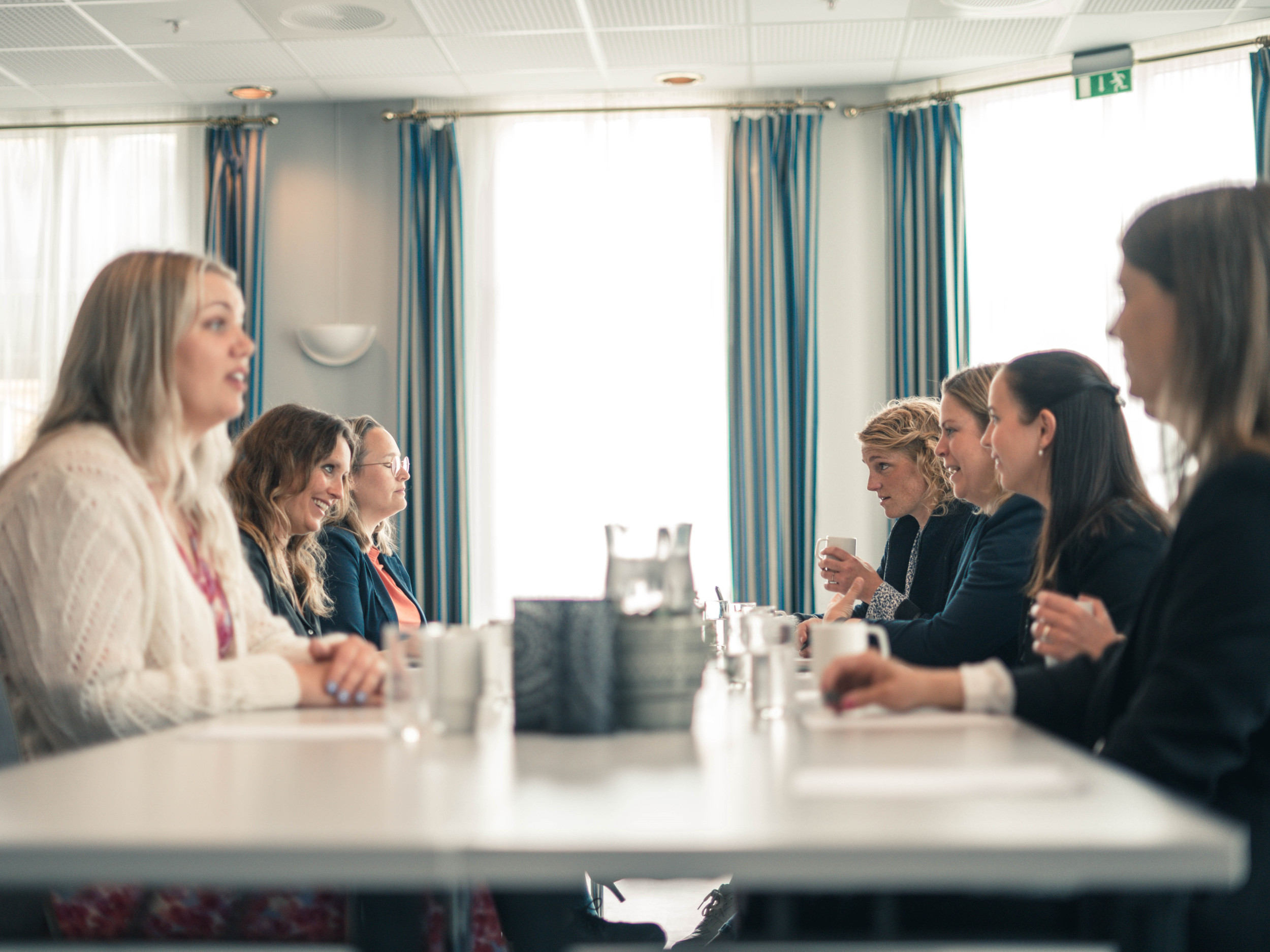
Are several of you travelling in the same direction? We encourage you to share a car, or preferably take the train to Egersund. The train station is less than 1.3 kilometres from the hotel. Many of our guests choose to take the pleasant walk along the river, past Berentsens Brygghus, towards the city centre. You can also help us sort your waste by using the sorting bins located in all meeting rooms. Help yourself to as much food as you like at the breakfast and lunch buffets, but please only take what you can eat. Remember that we also serve dessert and coffee.
What can you do as a tourist?
UN Sustainable Development Goal number 12 «Responsible consumption and production». In short, it is about doing more with fewer resources. This means that both society and individuals reduce the use of resources, minimise environmental degradation and climate emissions. As a tourist and traveller, you can choose sustainable tour operators that take into account nature, animals and the people living in the destination. You can support local cafés, shops and tourism instead of choosing the big chains. Geotourists explore places they can travel to by train (and car) rather than by plane. You can also reduce your environmental footprint by staying more days in one place, travelling shorter distances and choosing holiday destinations closer to home.

Still a long way to go
Although we have already taken a number of measures, there is still a long way to go. Working with sustainability and green transition is a process. To sharpen our focus and remember to constantly look for areas of improvement, we have established an internal sustainability group across all departments. The group's task is to look for areas where we can improve and develop to work even more sustainably. The group comes up with ideas and suggestions for improvement, several of which are tested and implemented.
Over a period of time, we have had too large a proportion of residual waste (as opposed to sorted waste) We have therefore implemented a number of measures to minimise the amount of unsorted waste. New sorting systems have been installed in kitchens, in facilities and in guest areas. We will also be working to achieve better solutions for sorting in all four of our bars and in our new bar reception.
We are currently in a phase where we weigh all food waste, as we want to determine whether it would be beneficial to invest in our own composting machine.